
DFM Review
Check wall thickness, draft, ribs, bosses, gates, ejection, warpage and tolerances before steel.
MoldRoute focuses on the review steps that protect tooling investment: DFM, material decisions, quality documents and sample release gates.
These capabilities support the service pages and help buyers prepare better RFQs.
Check wall thickness, draft, ribs, bosses, gates, ejection, warpage and tolerances before steel.
Plan dimensional checks, FAI, CMM, material certificates and production release records.
Connect resin choices to strength, appearance, shrinkage, finish, cost and molding defects.
Match hydraulic, electric or hybrid machine types and tonnage to part size, precision and cycle-time needs.
For buyer confidence, each capability page needs to explain not only what MoldRoute can do, but what the buyer can verify at each decision gate.
| Gate | Evidence buyer should expect |
|---|---|
| Before tooling deposit | DFM comments, material assumptions, cavity and mold-structure questions, and any design-change requests that affect quote reliability. |
| Before T1 approval | Sample photos, dimensional checks, cosmetic review, issue list and correction route if the first shots need mold adjustment. |
| Before production release | Agreed inspection scope, material confirmation, packing notes and batch-level quality records when the part requires traceability. |
Tonnage and capacity matter, but buyer risk usually comes from part geometry, mold structure, material behavior and sample correction loops.
Marked DFM notes, T1 issue tracking, dimensional reports and material records make capabilities inspectable before repeat production.
The buyer should be able to ask for specific proof rather than accept broad factory claims.
| Capability area | Buyer-facing proof to prepare |
|---|---|
| File intake | STEP, STP, IGES, X_T, SLDPRT, SLDASM, STL, PDF drawings, sample photos and ZIP packages for first engineering review. |
| Mold route | New mold quotation, rapid bridge tooling, mold transfer review, insert molding, overmolding and production mold planning. |
| Material review | ABS, PP, PC, PA66, POM, TPU/TPE, PMMA and project-specific resin grade discussion tied to function and appearance. |
| Tooling assumptions | Steel, cavity count, slider/lifter need, gate strategy, cooling, ejection, texture, polish, mold life and ownership terms. |
| Sample approval | T1 photos, marked issue list, dimensional checks, cosmetic review, correction action and buyer release confirmation. |
| Quality records | Basic dimensional report, FAI, selected CMM checks, material certificate, cosmetic standard and packing evidence when required. |
Representative images show the evidence categories buyers should request around mold steel, T1 samples and quality release.
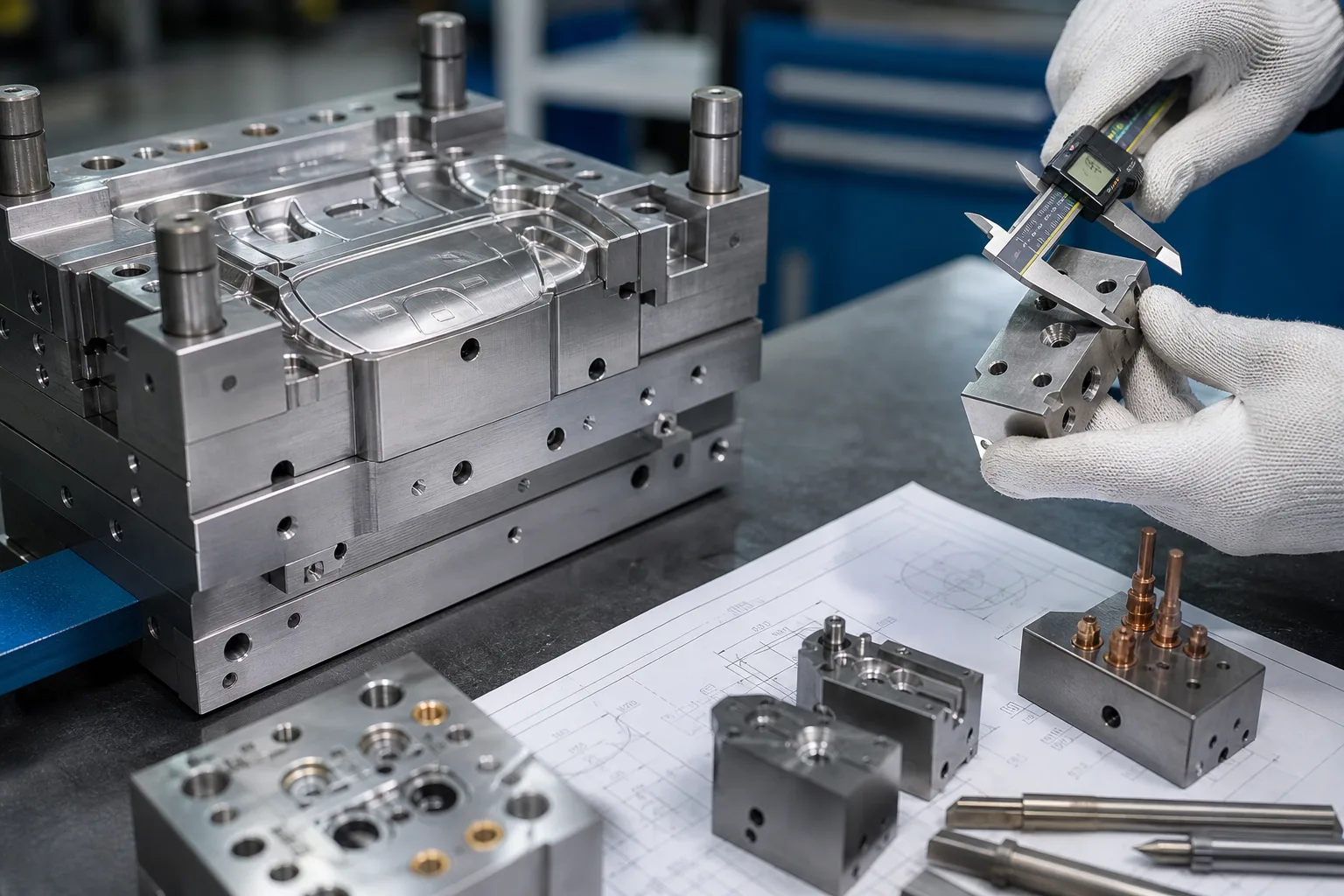
Mold review should make steel, cavity/core, inserts, gates and correction risk visible before production.
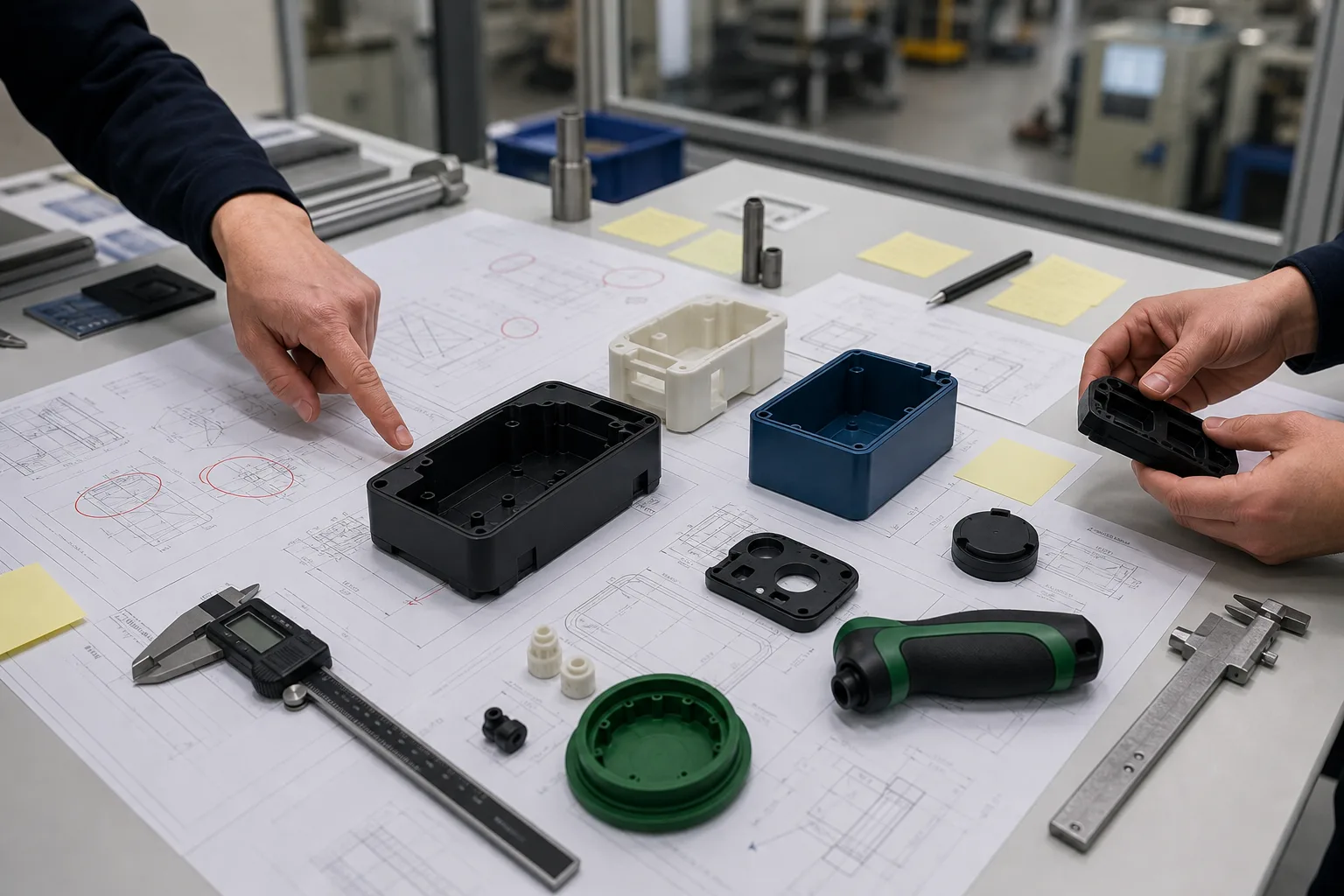
T1 review should connect molded samples with marked drawings, issue cause and correction action.
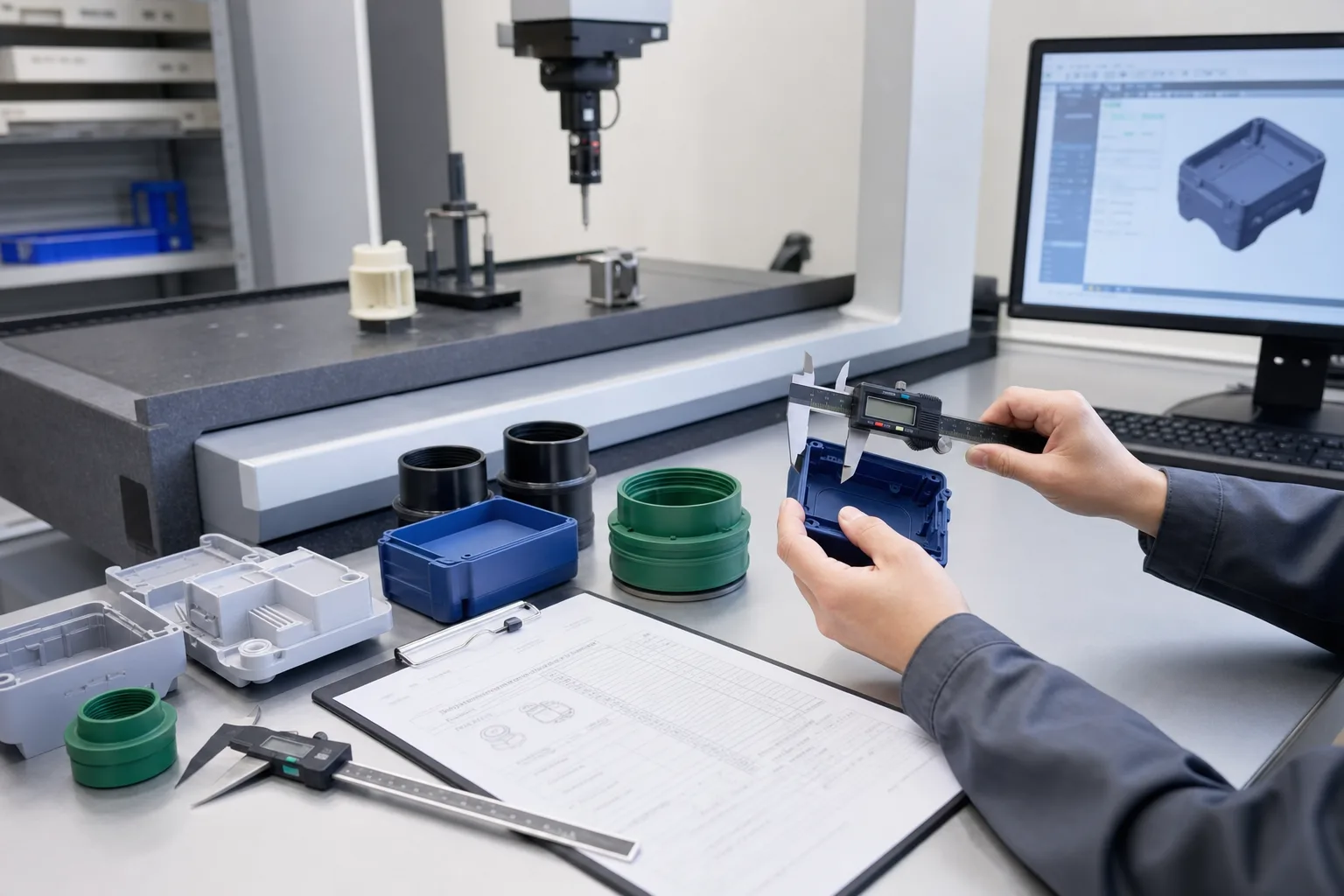
Quality scope should show measurement records, FAI/CMM needs and material confirmation before release.
A buyer may arrive through a general injection molding query, but the next step should be specific. The capability page explains which review should happen when the blocker is geometry, material uncertainty, sample approval, inspection scope or supplier rescue. This helps buyers who are still comparing options while moving qualified projects toward a quote with clearer engineering inputs.
| Project blocker | Capability to open next |
|---|---|
| Part is not ready for mold price | DFM review for wall thickness, draft, ribs, bosses, gates, ejector marks and tolerance feasibility. |
| Material choice is uncertain | Material guides to compare resin behavior, shrinkage, finish, drying and traceability needs. |
| Buyer needs release proof | Quality documentation for FAI, CMM, material certificates, cosmetic standards and production records. |
| The part type changes tooling risk | Part-type paths to connect enclosures, caps, inserts, overmolds and brackets with the right RFQ route. |