
Materials

Plastic material guides for injection molded parts.

Use material pages to connect resin choice with molding risk, appearance, tolerance, strength and cost.

Material routes

Compare practical resin options.

These pages are built for RFQ preparation and buyer education.

Tie each resin to the molded-part behavior it controls.
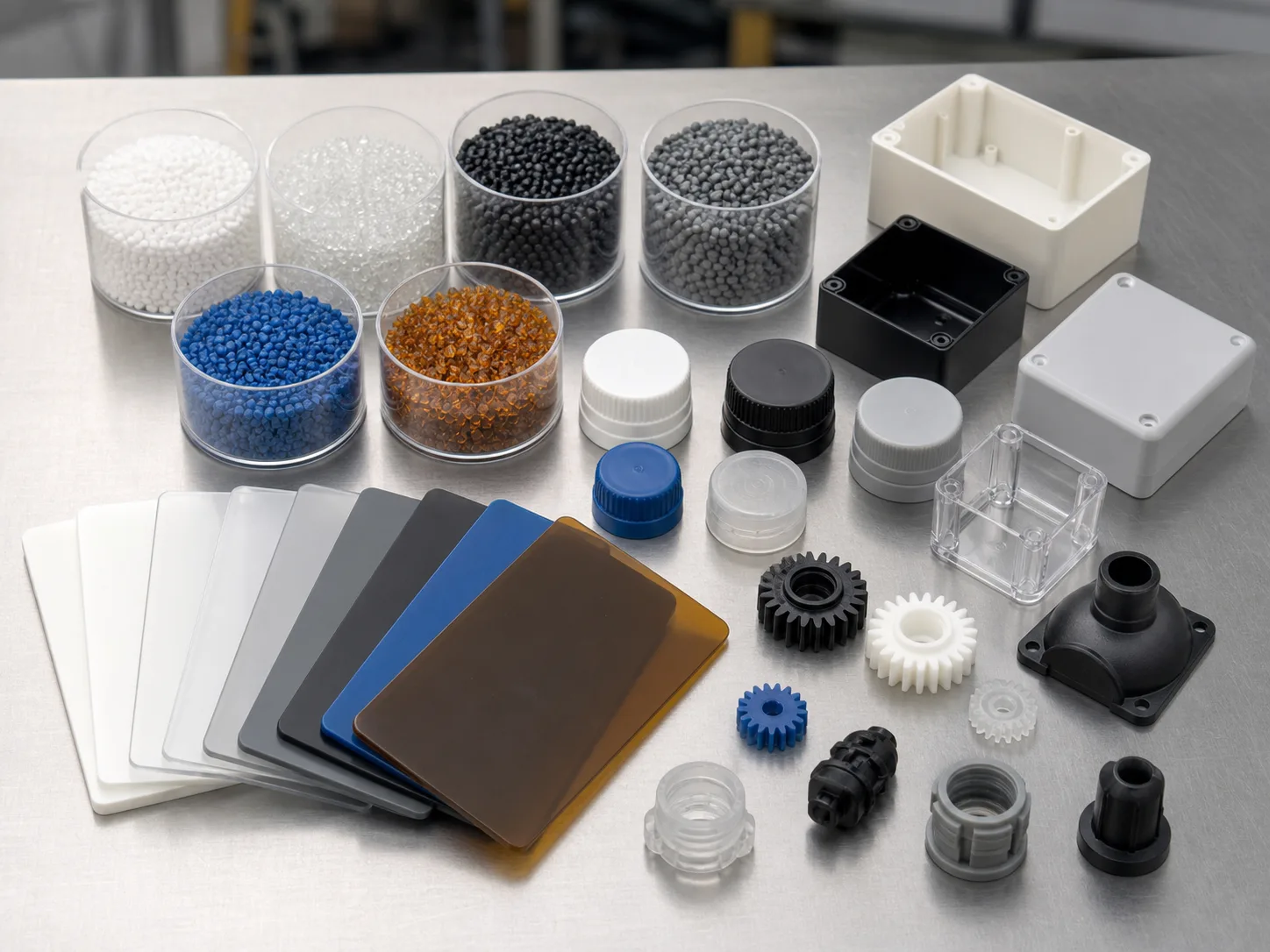
Representative material visual: resin choice has to be reviewed with wall thickness, finish, gate location and tolerance.
Material map

Tie each resin to the molded-part behavior it controls.

Material pages should help buyers compare real tradeoffs: strength, appearance, shrinkage, heat, flexibility and quote risk.

ABS for balanced housings, covers and paintable partsPP for caps, closures, living hinges and chemical resistancePC and PMMA for impact or clear visual partsPA66, POM and TPU/TPE for mechanical, sliding or soft-touch functions
ABS

ABS Injection Molding

Balanced, paintable and practical for housings, covers and consumer product parts.

Selection questions

Material choice should be tied to function and molding risk.

A resin name is not enough for a quote. The same ABS, PP or PC request can change when the part has cosmetic surfaces, snap fits, tight tolerance, heat exposure or compliance requirements.

QuestionWhy it changes the molding route
Is the surface cosmetic?Gate vestige, flow marks, texture, polish and paint requirements can change gate location and mold finish.
Does the part carry load?Creep, stiffness, rib design and material reinforcement need review before mold steel.
Does the material need drying or traceability?PC, PA66 and other engineering plastics may require drying control, certificates or batch records.
Is the part flexible or soft-touch?TPU/TPE requests require hardness, flash, deformation and bonding assumptions.
Common material mistakes

Avoid choosing resin by name alone.

Many molding problems start when the quote uses a familiar resin name but omits the part function. Material selection should connect the resin to heat, impact, chemical exposure, friction, transparency, outdoor use, compliance and the appearance standard the buyer will use to approve T1 samples.

MistakeBetter RFQ detail
Only writing ABS or PPAdd grade preference, finish, color, wall thickness and whether the part is cosmetic or functional.
Ignoring drying and shrinkageAsk how material behavior changes gate location, tolerance and inspection.
Treating clear parts like opaque partsState clarity, polish, gate vestige and inspection lighting requirements.