
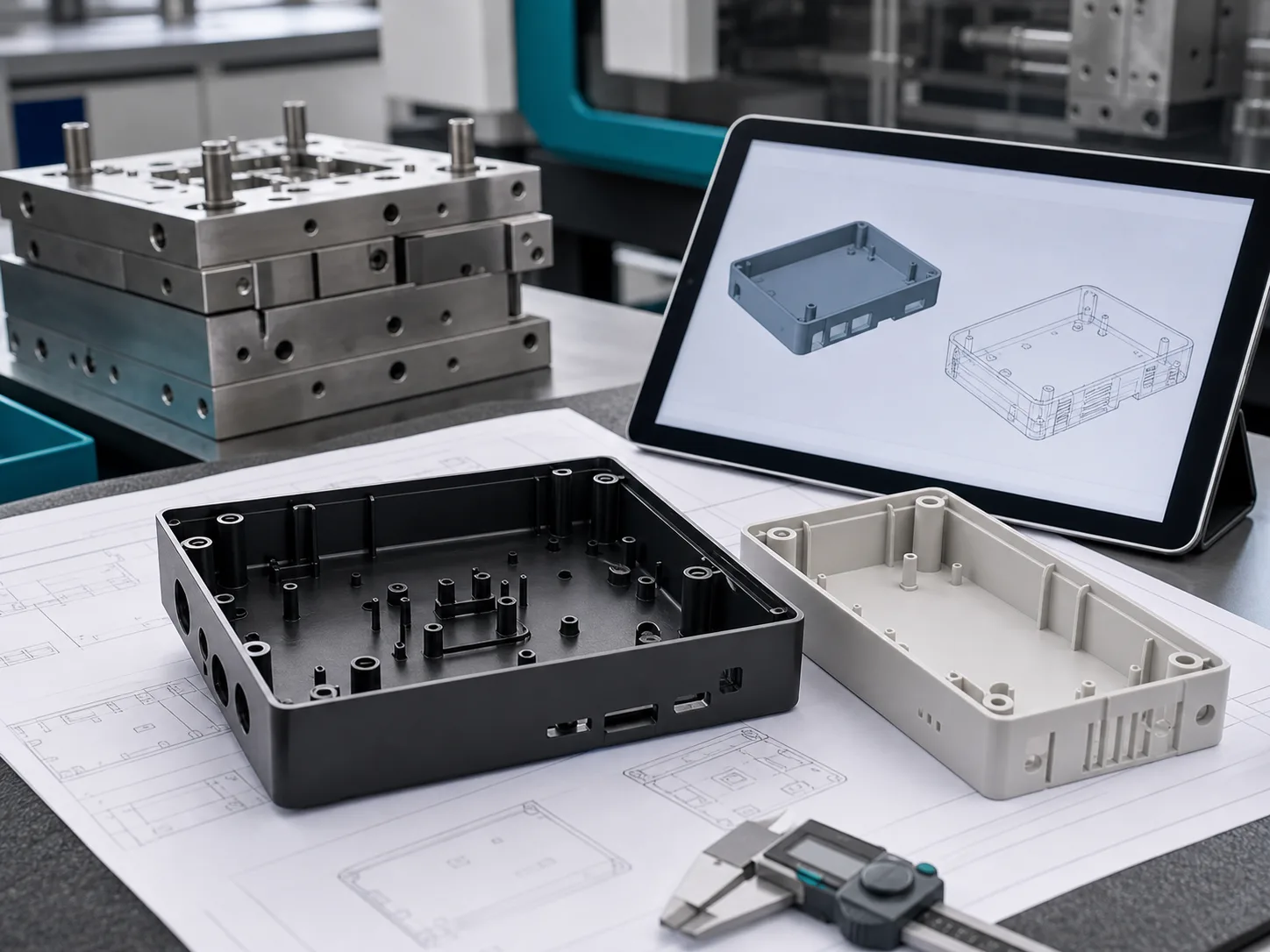
Plastic Injection Molding
From T1 samples to scheduled molded-part production with batch and release checks.
Choose the manufacturing path that matches your current part stage, tooling need and production quantity.
Each service page explains inputs, fit, outputs and the RFQ path.
From T1 samples to scheduled molded-part production with batch and release checks.
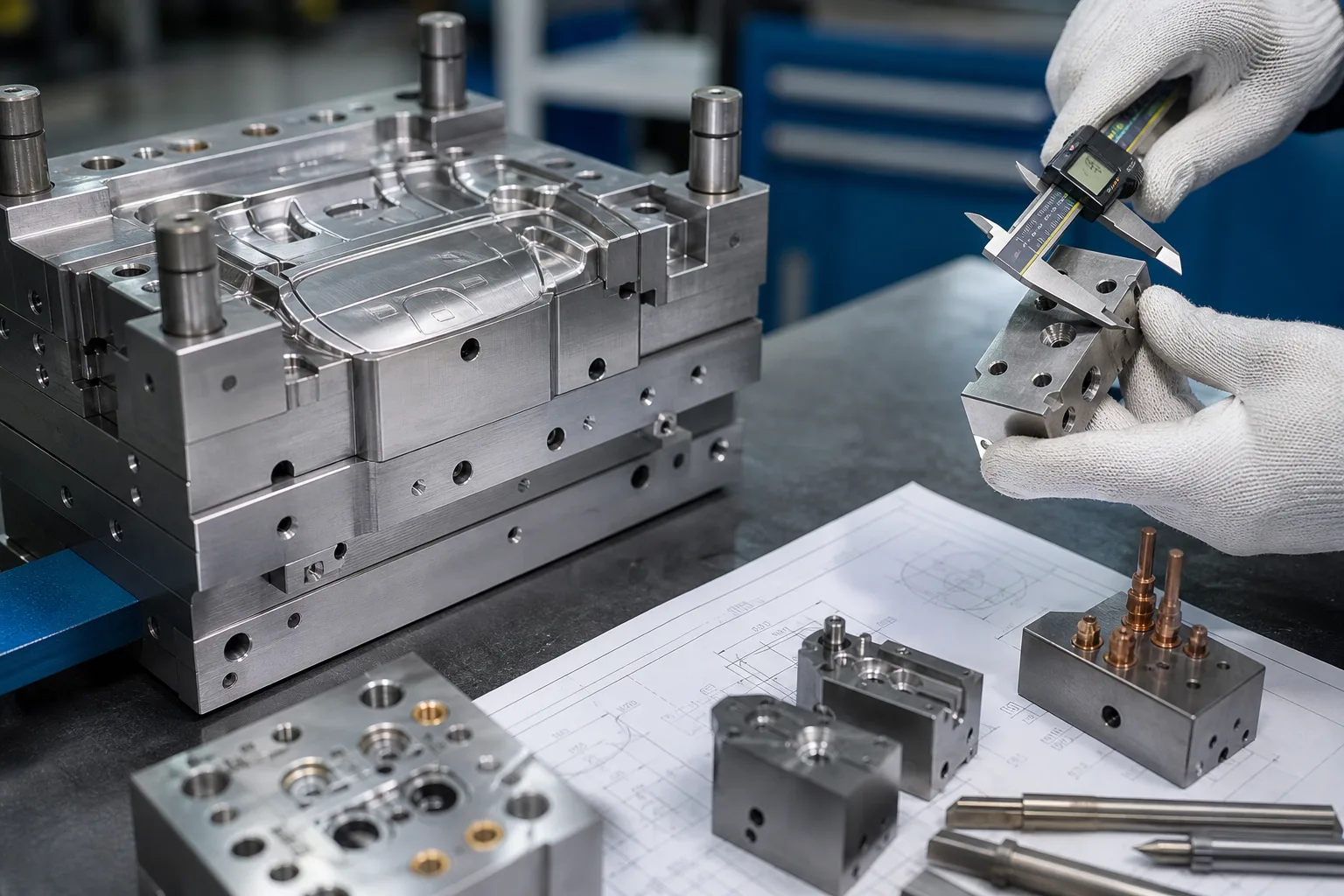
Mold design, steel, cavity count, slider, cooling and correction loops need early visual review.
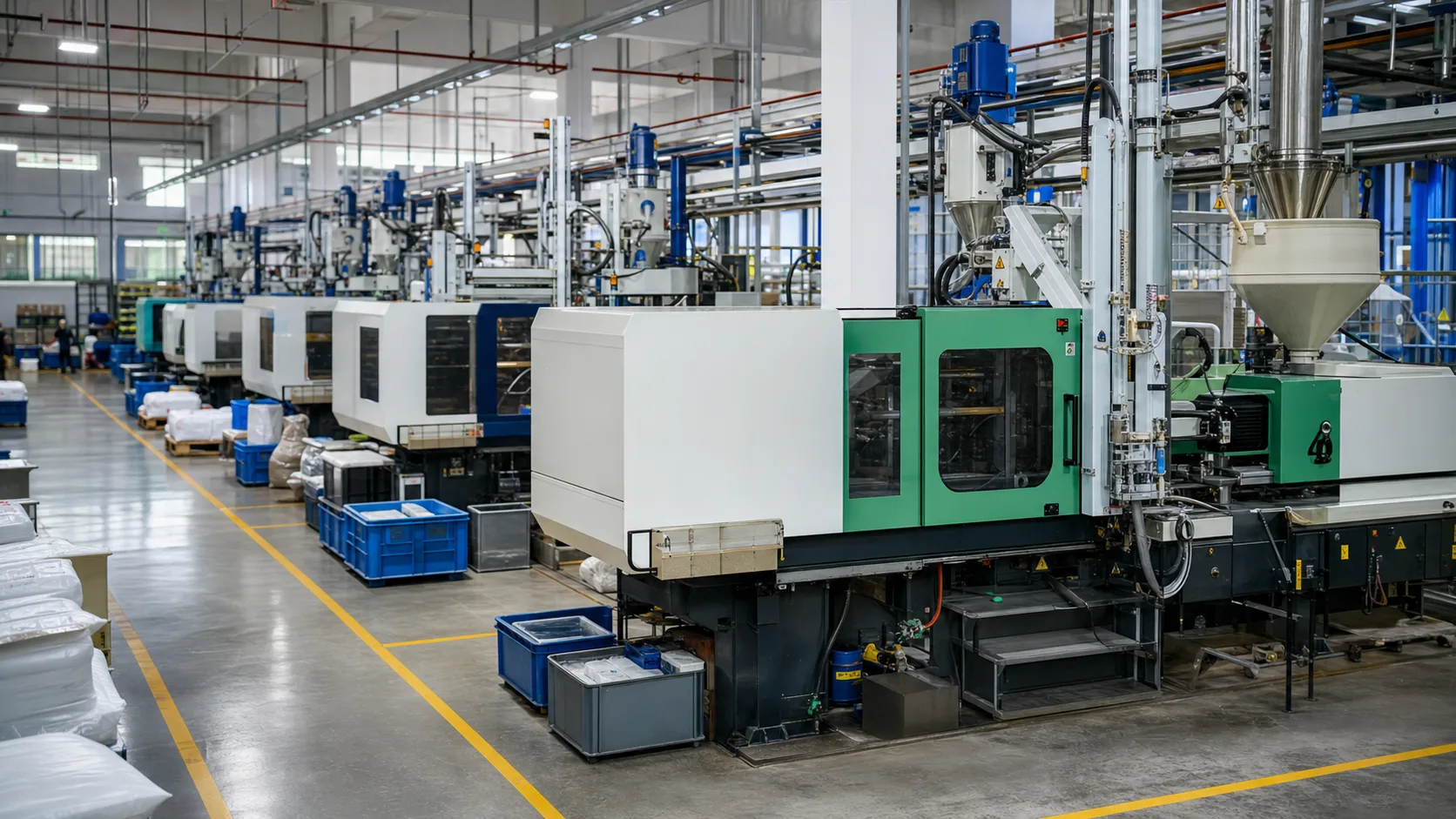
Use bridge tooling when the product needs real resin samples before full production investment.
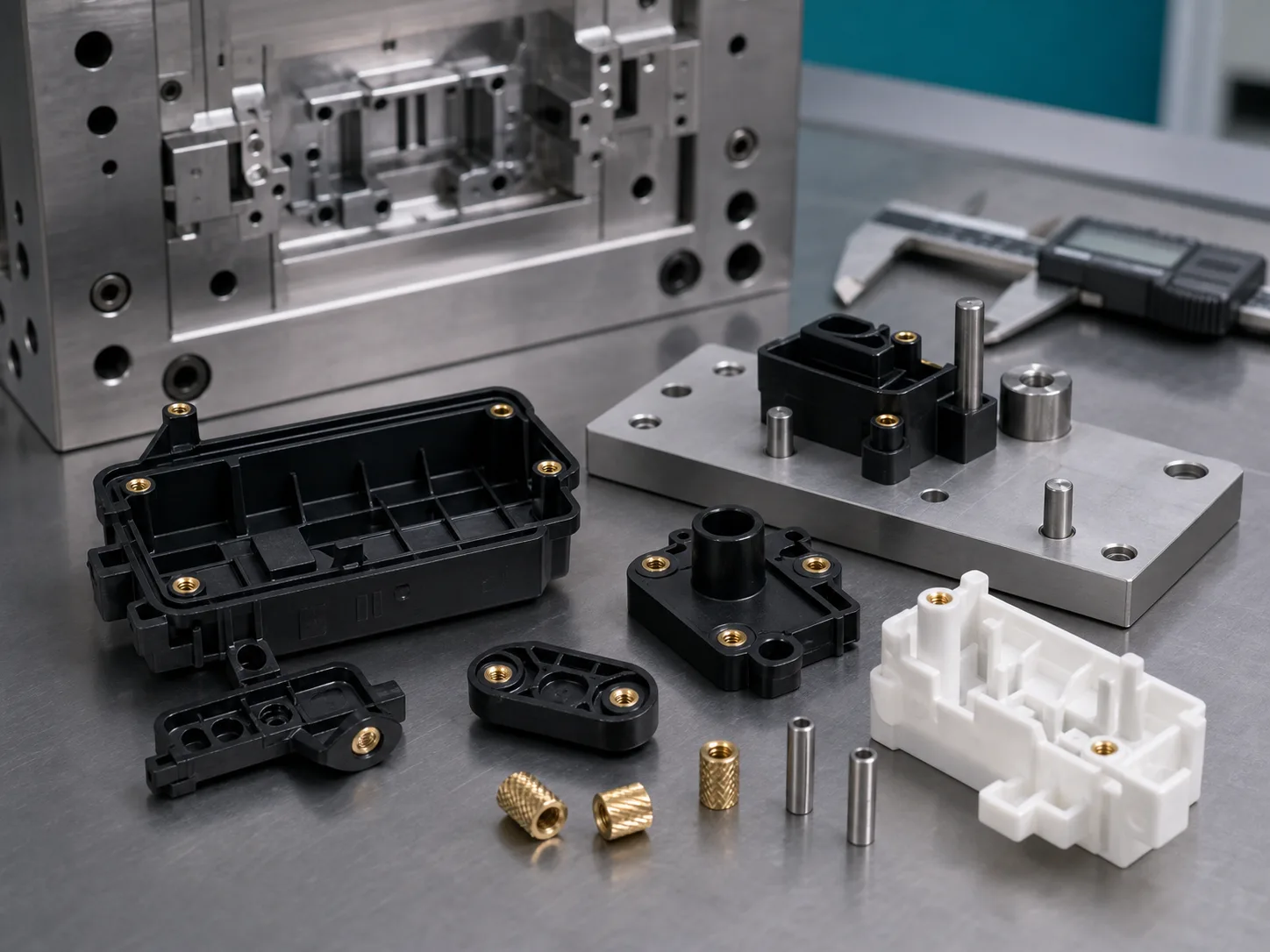
Insert location, retention, flow around hardware and inspection points should be visible before T1.
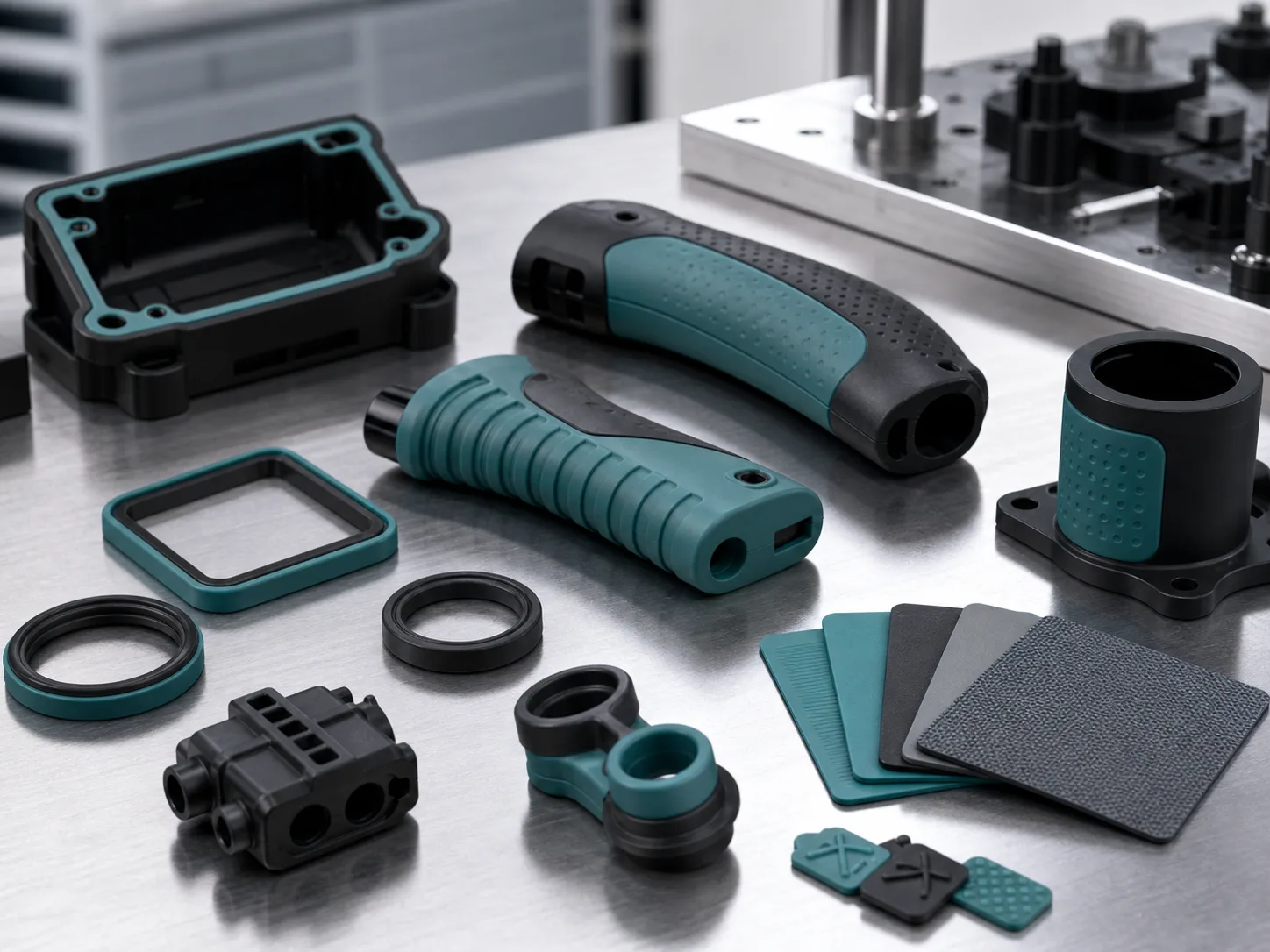
Soft-touch and sealing parts require material compatibility, bonding and flash review.
CAD review should mark the features that can change tooling cost, lead time and sample quality.
The better the input, the faster the DFM and mold assumptions become clear.
| Input | Why it matters |
|---|---|
| 3D CAD | Determines mold structure, parting line, gate, ejection and slider risk. |
| Material target | Controls shrinkage, drying, strength, appearance and cost. |
| Quantity | Determines prototype, bridge or production tooling path. |
| Quality needs | Defines inspection effort, documents and release gates. |
This snapshot gives buyers a more concrete way to compare MoldRoute against generic injection molding suppliers.
| Capability area | Buyer-facing proof to prepare |
|---|---|
| File intake | STEP, STP, IGES, X_T, SLDPRT, SLDASM, STL, PDF drawings, sample photos and ZIP packages for first engineering review. |
| Mold route | New mold quotation, rapid bridge tooling, mold transfer review, insert molding, overmolding and production mold planning. |
| Material review | ABS, PP, PC, PA66, POM, TPU/TPE, PMMA and project-specific resin grade discussion tied to function and appearance. |
| Tooling assumptions | Steel, cavity count, slider/lifter need, gate strategy, cooling, ejection, texture, polish, mold life and ownership terms. |
| Sample approval | T1 photos, marked issue list, dimensional checks, cosmetic review, correction action and buyer release confirmation. |
| Quality records | Basic dimensional report, FAI, selected CMM checks, material certificate, cosmetic standard and packing evidence when required. |
These answers help search engines and buyers understand which MoldRoute service path fits each stage of the injection molding project.
Choose injection molding production when the part geometry is stable enough for DFM, mold assumptions, T1 samples, quality planning and repeat molded-part supply.
Injection mold making is the right path when the buyer needs mold steel, cavity count, slider, cooling, ejection, T1 correction and mold ownership assumptions clarified.
Rapid tooling makes sense when real-resin samples, pilot quantities or bridge production are needed before committing to a full production mold.
Buyers should compare DFM notes, tooling assumptions, T1 correction rules, quality records, material evidence and mold ownership terms before comparing unit price alone.
A serious molding quote should make lead time, mold ownership, sample gates and release evidence visible before the buyer compares prices.
| Commercial question | What MoldRoute should clarify before quote approval |
|---|---|
| Typical MOQ | Pilot and bridge projects can start lower when the tooling route fits; repeat production should define first order and annual demand separately. |
| Lead time | The quote should separate DFM clarification, mold build, T1 sampling, correction loop and production release instead of giving one vague date. |
| Mold ownership | Confirm whether the mold is buyer-owned, where it is stored, what maintenance is included and what happens if transfer is requested. |
| NDA and file sharing | A first fit review can start from limited context; detailed CAD, drawings and supplier files can wait until NDA terms are agreed. |
| Payment gates | Tooling deposit, T1 approval, correction responsibility and production payment should be tied to clear evidence gates. |
| Export packing | Approved molded parts may need packing notes, labels, carton protection and handoff to packaging execution. |
A useful injection molding supplier page should separate design-readiness questions from tooling, sampling and production decisions. This helps buyers find the page that matches their next action.
| Current buyer situation | Best MoldRoute path |
|---|---|
| Stable CAD and production target | Plastic injection molding for DFM, mold assumptions, T1 and production release. |
| New mold investment or supplier rescue | Injection mold making for steel, cavity, slider, cooling and correction planning. |
| Need real-resin samples first | Rapid tooling for pilot runs and bridge production before full tooling. |
| Metal hardware inside plastic | Insert molding for insert retention, fixture and pull-out risk review. |
| Soft-touch or sealing surface | Overmolding for bonding, flash, feel and seal approval. |
Injection molding quotes can look similar while assuming different mold life, steel, cavity count, sample correction scope, quality records and ownership terms. This service index helps buyers ask those questions early so the RFQ is judged by the manufacturing route, not only by the lowest visible unit price.
| Quote assumption | Why buyers should ask |
|---|---|
| Mold life and steel | Controls durability, maintenance and whether the tool fits pilot or production use. |
| T1 correction policy | Clarifies what happens when first samples need geometry, gate or cosmetic adjustments. |
| Quality evidence | Defines which reports, certificates and inspection records support production release. |